In O'Gorman' second chapter, he discusses picture theory and the first painting that the reader is able to see is Stephen Gibb's Eye Socket. This painting poses a question. Can a body part really be considered another outlet? Can it really be boiled down to that? Our senses are essentially that. We process information through our senses, and I think that this is O'Gorman's point in this chapter. Although the Republic of Scholars considers language as the official method of delivering information, the author introduces us to the concept of pictures, paintings, words, and symbols as vibrant ways of communicating ideas.
Language seems to operate on old paradigms, in which there is only one set of rules for learning and communicating. We have actually evolved into a culture that expects symbols to drift in and out of focus. There are symbols on public bathrooms, drive ins, and shopping malls. They inform us of the mundane as well as the need to beware. The biohazard symbol clearly communicates potential danger without a word, sentence, or punctuation.
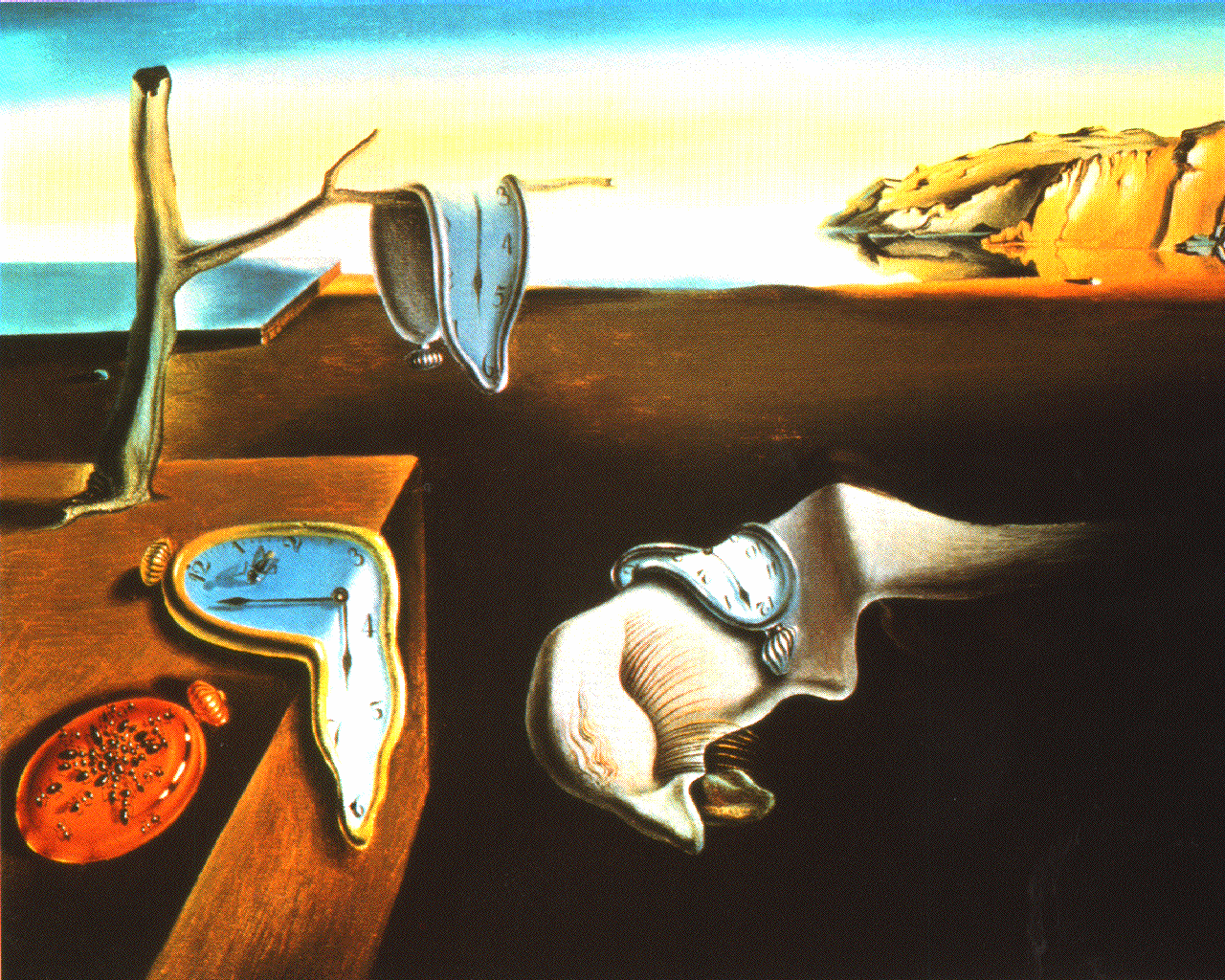
I especially like O'Gorman's idea about painting with Salvador Dali or Max Ernst. I think its important to point out that these artist were not considered part of the art world. Their work was considered crude, childish, and downright offensive. Dali was a surrealist and often painted images from his own dreams. Ernst's work can sometimes appear like a nightmare, with random images fused with the human body. In the tradition of the cyborg, both artist took what they liked from art and put together a new creation. They built their own genre , instead of conforming to the rules.
He discusses William Blake in a later chapter but he touched on the fact that he was one of the first artist to make use of text in artwork. In researching Blake, he did appear mad at times but I think that this idea was in one of his more lucid moments. He wanted to make a bigger impact and reach a broad audience. Despite ridicule, Blake continued on this path and added text to a great many of his paintings.
O'Gorman says quite frequently that the is trying to short circuit the ideas associated with old media. The author supports new ways of conducting humanities research. New media should be able to present ideas in the same rich way that the book used to. Ideas may even become clearer once we make use of hyper links, rich colors, and graphs. The internet is so accessible that it would be a waste if it were not used. I would even like to see it used to its full capacity.




1 comment:
Good, though somewhat perfunctory. I like your paragraph on Dalí.
Post a Comment